
Wardogs Alfa Impressions: A Surprisingly Solid Start
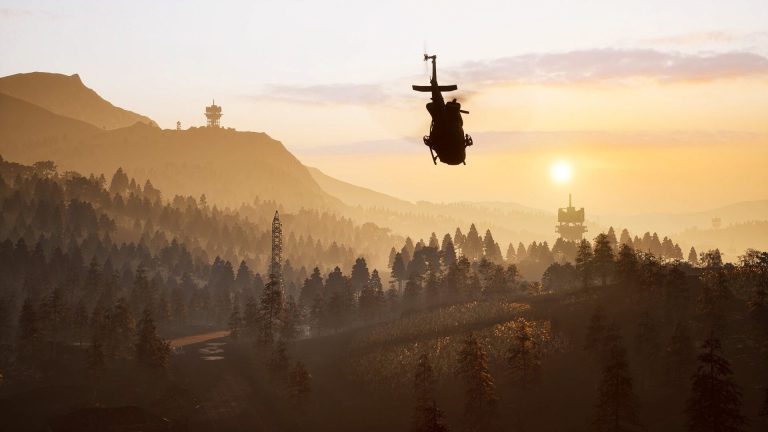
WARDOGS is still in a very early alpha, so I’m not going to pretend two hours is enough for a full review.
It isn’t.
What I did get was enough time to get a decent feel for the shooting, movement, supply runs, hot zones and, more importantly, just how often I could get myself killed.
Quite often, as it turns out.
The first thing that surprised me was how smoothly it ran.
Going into an early alpha, I was expecting bugs, dodgy performance and at least one moment where I’d somehow fall through the floor and end up staring into the void.
Instead, it was actually pretty solid.
Movement felt responsive, performance was good on my system, and some of the scenery was genuinely lovely.
Not really what I expected one of my main notes to be from a military survival game, but there we are.
The world already has a decent sense of scale to it as well. You are not just walking from one tiny combat area to another. There is enough space around you to make travelling, supply runs and moving into more dangerous areas feel like part of the experience rather than just downtime between firefights.
That matters in a game like this.
If the world feels empty, the whole thing can quickly become a long walk followed by ten seconds of shooting.
WARDOGS, at least from what I played, avoided that feeling.
The shooting itself felt good too.
There’s enough recoil that the weapons don’t feel completely weightless, but not so much that every firefight turns into you fighting your own mouse.
Reloading is straightforward.
Press R.
Gun gets reloaded.
Carry on trying not to die.
Simple, but I prefer that to games which decide reloading needs its own university degree.
There’s also a tutorial, which I appreciated, because games like this sometimes have a habit of throwing you into the world with seventeen different systems and apparently assuming you’ve already read the manual that doesn’t exist.
WARDOGS at least gives you some idea of what you’re supposed to be doing before everyone starts shooting at you.
Once you’re out in the world, supply runs become a big part of the loop.
Some of the resource gathering reminded me a little of Rust, where you’re hitting marked areas rather than just standing there holding a button while a bar slowly fills up.
It is not exactly the same system, but it gave me that same feeling of actually doing something in the environment rather than just watching a timer.
Then you’ve got the hot zones.
That’s where things start becoming more interesting because there is money to be made, but obviously the game also decides this would be a lovely place for everybody to try and murder each other.
The risk-and-reward side of that worked for me.
You know there is a reason to go in.
You also know there is a fairly reasonable chance you are going to regret going in.
That little bit of tension is important because without it, supply runs could easily turn into nothing more than driving from A to B and watching a number go up.
I did manage to earn some money.
I also got shot.
Then I tried helping someone.
Got shot doing that as well.
At one point I even tried bribery after being shot.
Nobody was interested.
So apparently my military career and my diplomatic career are both going equally well.
One of the people I played with told me that doing supply runs with Urals can apparently bring in somewhere around 60,000 to 100,000 in a game.
I didn’t personally make anything close to that, so I’m not going to claim those numbers as something I verified myself.
But if that is the sort of money experienced players can make, there could be a decent economy there once people understand the systems and know which risks are worth taking.
That part is going to be important.
Games built around earning money, buying equipment and heading back out can become addictive very quickly when the balance is right.
But if money becomes too easy to make, progression stops meaning much.
If it becomes too slow, it turns into a grind.
Two hours obviously is nowhere near enough time to judge which way WARDOGS will go, but the basic loop is there.
My biggest concern has nothing to do with the guns, the graphics or the performance.
It’s the player count.
The lobbies I saw seemed to need around 63 or 64 players, with a maximum of 100.
If the game has a healthy player base, that could make for some brilliant large-scale matches.
You can imagine supply convoys moving around, players fighting over valuable areas, groups trying to control routes and the whole map feeling unpredictable because there are enough people around to create trouble.
If there are ten of you sitting in a lobby, though...
Well.
Get comfortable.
Obviously, this was an alpha test, so I’m not going to look at the number of people playing during a test and declare the whole thing doomed.
That would be ridiculous.
But if WARDOGS is going to rely on matches this big, it either needs enough players to keep filling them or some sort of backup option where matches can start with fewer people.
That could mean scaling the requirements, filling spaces another way, or simply making sure the game still works when the population is lower.
Because there’s nothing worse than buying a multiplayer game, loading it up and discovering the hardest enemy in the entire thing is the lobby screen.
That is probably the biggest thing I’d keep an eye on.
Everything else I tried left me fairly positive.
The game ran smoothly, the environments looked good, the gunplay worked, and even after getting myself killed repeatedly I still wanted another go rather than switching it off and pretending none of it had happened.
That is normally a good sign.
What I also liked was that it did not feel like the game was fighting me technically.
That sounds like a small thing, but in an early alpha it really isn’t.
If controls are awkward, performance is all over the place or basic interactions keep breaking, it becomes very difficult to judge the actual game underneath.
I did not have that problem here.
Instead, I could concentrate on what I was doing, where I was going and which terrible decision I was about to make next.
There’s obviously still a lot I couldn’t properly judge in two hours.
I don’t know how the economy will hold up long term.
I don’t know how progression will feel after 20, 30 or 50 hours.
I don’t know whether supply runs will still be fun once you’ve done loads of them.
And I don’t know yet whether the game has enough variation in objectives, equipment and situations to stop that core loop becoming repetitive.
Those are the things that will matter later.
A good first two hours can get people interested.
A good first fifty hours is what keeps a game like this alive.
That’s why I wouldn’t call this a full review.
It’s an early impression of something that, at the moment, seems to have a surprisingly solid base.
The standard edition was listed at £36.99 when I checked, with the Supporter Edition at £45.99.
That isn’t cheap for something still in development, so people are naturally going to expect updates, content and a player base big enough to keep the whole thing moving.
At that price, I would also want to see how quickly the game grows beyond the basic loop I played.
More variety, more reasons to go into dangerous areas and enough progression to make successful runs feel worthwhile will make a big difference.
But I came away interested.
WARDOGS didn’t feel like an alpha that was just about holding itself together long enough for people to test it.
It already felt playable.
It looked better than I expected.
The basic risk-and-reward loop made sense.
And, most importantly, I actually wanted to go back in.
For something this early, that is probably the best compliment I can give it.
I just need to work on the survival part.
And probably stop trying to bribe people immediately after they’ve shot me.
Apparently that isn’t how warfare works.
By Matt Flynn
Contributor, Extreme Gaming Podcast
Originally reviewed for the podcast: 3 September 2026